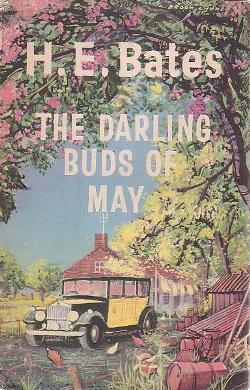
The Enduring Debate: Is H.E. Bates' Darling Buds a True Classic or a Nostalgic Gem?
Few books evoke such widespread warmth and nostalgia as H.E. Bates' The Darling Buds of May. For many, the very mention of the Larkin family conjures images of sun-drenched Kentish countryside, overflowing picnic baskets, and a hearty, unpretentious joy for life. Penned by the celebrated Darling Buds Of May Author, H.E. Bates, this novel and its subsequent series have captivated generations, cemented by the immensely popular 1990s television adaptation starring David Jason as Pop Larkin.
But beyond its undeniable charm and cultural impact, where does The Darling Buds of May truly stand in the literary landscape? Is it a profound classic worthy of academic study, or a beloved, comforting read that thrives on sentiment and a longing for a bygone era? The answer, as with much in life, is nuanced, lying somewhere in the delightful space between.
The Idyllic World of the Larkins: H.E. Bates' Masterclass in Rural Comedy
At the heart of the novel's appeal is the eccentric and utterly charming Larkin family: Pop and Ma, their numerous children (including the spirited Mariette), and their chaotic yet idyllic existence in rural Kent. They are a family living "off the grid," flouting the conventions of society and the taxman's rules with good-natured irreverence. Ostensibly poor, they are, in truth, rich in spirit, resourcefulness, and an unshakeable belief that life is meant to be savoured.
H.E. Bates, the master of idyllic rural comedy and charm, found his truest voice in the Larkin stories. Unlike some of his more dramatic works, such as *Love for Lydia*, where the melodrama of the wealthy failed to resonate deeply with all readers, Bates' comedic touch in *The Darling Buds of May* is unequivocally firm. His humour is raucous, gentle, and utterly English, reflecting a post-World War II landscape where technology had yet to truly dominate, and a simpler way of life still held sway. It's an homage to a particular vision of Englishness in the early 1950s, a period seen through rose-tinted glasses where life was abundant and problems melted away in the Kentish sunshine.
The story's enduring popularity stems from its ability to transport readers to this seemingly perfect world. Bates crafts scenes with vivid "brushstrokes," painting a picture of pastoral beauty that feels both authentic and aspirational. From the descriptions of bountiful garden produce to the joyful, often spontaneous, feasts enjoyed al fresco, Bates celebrates the epicurean delights of food, drink, and love with unparalleled gusto. This unapologetic embrace of simple pleasures makes the book not just a story, but an invitation to a lifestyle.
The "Classic" Conundrum: Depth, Caricature, and the Illusion of a Bygone Era
Despite its widespread affection, *The Darling Buds of May* often finds itself omitted from lists of traditional literary "classics." Critics sometimes point to its perceived lack of depth, arguing that the characters are more caricatures than complex individuals. Pop Larkin, for example, is portrayed as a bumbling, jovial patriarch, perhaps a bit too free with his hands, leading a life that skirts the edges of legality and morality. Were the Larkins to be transplanted from their beautiful countryside to a grittier urban setting, their "perfick" existence might reveal a much darker, more problematic reality.
This raises the question: can a book be a classic if its characters are "two-dimensional" or if it depicts a time that "didn't really exist"? Many argue that H.E. Bates, while brilliant at atmosphere and comedy, didn't delve into the psychological complexities or societal critiques often found in works considered true classics. The world of the Larkins is a fantasy, a romanticised ideal of a bygone age, and the nostalgia it evokes is for something perhaps never fully real.
Yet, this very lack of gritty realism is often precisely why readers flock to it. It offers an escape, a balm for the soul in a world that often feels overly complicated. For a deeper dive into why this approach to characterisation endures, explore our related article: H.E. Bates and The Larkins: Why His Two-Dimensional Characters Endure.
Beyond the Page: The Lasting Impact and Why We Still Care
So, if *The Darling Buds of May* may not fit the traditional mould of a literary classic, what explains its enduring popularity and the deep affection readers hold for it? The answer lies in its unique blend of charm, escapism, and the sheer joy it communicates. Despite the critical observations about character depth, readers consistently report caring deeply about the Larkins. They want to know what happens next, eager to return to their "perfick" world, a testament to the author's ability to create engaging, if uncomplicated, personalities.
The cultural impact of the television series cannot be overstated. For many, it was their introduction to the Larkin family, solidifying the images of David Jason's Pop and Catherine Zeta-Jones's Mariette in the collective consciousness. This adaptation, watched by millions, breathed new life into the books, demonstrating their timeless appeal and ability to translate across different mediums.
Ultimately, Bates provides a window into a joyful philosophy of life: seize the day, cherish simple pleasures, and don't let rules get in the way of happiness. While it may not challenge your intellect in the same way a Dostoyevsky novel might, it certainly nourishes the spirit. The book's role as a nostalgic gem is undeniable, serving as a comfort read that transports us to a simpler, happier place. It's a reminder that literature doesn't always need to be profound to be deeply valuable and cherished. The very choice of the book by an English teacher for twelve-year-olds highlights its unique ability to capture "the art of living a full and plentiful life," proving its value as more than just a light read.
Conclusion: A Beloved Bridge Between Classic and Comfort
To label H.E. Bates' The Darling Buds of May solely as a "nostalgic gem" would be to undervalue its widespread and enduring appeal. While it may not fit every academic definition of a "classic," its capacity to bring joy, inspire a love for life's simple pleasures, and create characters that readers genuinely care about places it in a unique and important category. The Darling Buds Of May Author succeeded in crafting a world that, regardless of its realism, resonates deeply with a universal human desire for happiness and freedom.
It stands as a cultural classic, a beloved fixture in English literature that continues to be discovered and adored by new generations. So, whether you seek profound literary depth or simply a "perfick" escape to a sun-drenched, carefree world, The Darling Buds of May offers a delightful experience that bridges the gap between critical analysis and pure, unadulterated pleasure. It is, perhaps, the best of both worlds: a truly cherished work that brings comfort and cheer, solidifying its place in the hearts of readers for decades to come.